Digital, inclusive, and transformative: Quality education for Montenegro
| Project title: | Digital, inclusive, and transformative: Quality education for Montenegro |
| Participating agencies: | UNICEF, UNESCO, ILO |
| Lead Agency: | UNICEF |
| Project manager: | Ivana Boškovic, Maja Kovačević |
| Timeframe: | December 2023 – December 2025 |
| Budget: | 500,000 USD |
Area of intervention
The proposal aims to accelerate Montenegro’s EU Accession and the 2030 Agenda for Sustainable Development. It directly contributes to SDGs 4, 5, 8, 10, 16 and 17. In particular – human capital development, education, gender equality, social development and human rights.
The intervention tackles three key challenges to the successful digitalization of education:
- Insufficient capacities of teachers and school professionals to use digital tools and technologies for teaching and collaboration.
- Lacking or scarce digital infrastructure in schools, including digital devices and quality digital content; and,
- Unequal access to education and limited involvement of children and adolescents, including in the co-creation of EdTech initiatives and the acquisition of 21st century skills, employability skills and career guidance.
The project is aligned with the Cooperation Framework 2023-2027:
Outcome 2: By 2027, all people, especially the vulnerable, increasingly benefit from equitable, gender-responsive and universally accessible social and child protection system and quality services, including labour market activation and capabilities.
Output 2.2: Participative policies and capacities of key stakeholders are improved to provide development of inclusive and labour market-oriented, 21st century skills, including sustainable mechanisms for successful school-to-work transition, reskilling opportunities, and lifelong learning, for improving employability and activity rates of women, youth and all vulnerable groups.
Outcome 3: By 2027, all people, especially the vulnerable, benefit from strengthened human capital, including early childhood development, and more resilient, gender-responsive, and quality healthcare and education.
Output 3.2: Capacities enhanced to formulate and implement policies for improved learning outcomes and access to quality, gender informed education that is career oriented, inclusive, equitable and shock resilient.
Partners
Ministry of Education, Science and Innovation is partner in the project implementation and it is being implemented in collaboration with schools at different educational levels (both primary and secondary schools) across six municipalities in north.
As well, partners on the project implementation are NGO Junior Achievement Montenegro, Montenegro Media Institute, NGO Učionica u pokretu (teachers' association providing trainings in digital skills); NGO "Prima", organization, specialized in gender-based violence prevention, as well as the Montenegrin Employers’ Federation.
The project relies on a coordinated and collaborative multi-stakeholder approach including project partners such as the Centre for Vocational Education, the Bureau for Education Services, private sector, and academia.
Key objectives
This action will provide children and adolescents with opportunities to achieve better educational outcomes and to acquire the skills needed for learning, living and working in the 21st century, in collaboration with the 12 schools in northern region (primary, secondary, vocational) in six municipalities (Berane, Rožaje, Plav, Mojkovac, Petnjica, Pljevlja), with a total of 581 teachers and 6,201 students. All activities are geared towards sustainability and further replicability across the whole country.
Major expected results
1. Primary and secondary school teachers are capacitated to use modern didactics for online, offline, and blended learning, including a learner-centered approach, e-pedagogy and special support for the most vulnerable students. This includes the use of Microsoft (MS) tools and the Digital School Platform, the prevention of online violence, and improving media and information literacy. A network of ICT coordinators / focal point will be created to support peer-to-peer learning and school partnerships between selected primary and secondary schools and EdTech Hubs. At least 60% of all teachers in targeted municipalities will be targeted, and all IT school coordinators across the country shall acquire the skills for implementation of the Digital School Concept.
2. The Digitalna Skola platform is enriched with digital teaching and learning contents, focusing on quality and inclusive digital content for STEM skills, career guidance, core-employability skills and prevention of online violence. EdTech Hubs are established at primary and secondary schools in six municipalities in the northern region and provide quality and inclusive learning opportunities for all children and adolescents, with a focus on gender equity, including Roma, disadvantaged and students with disabilities. At least 6 digital courses will be developed and made available on the Digital School Platform.
3. Children and adolescents in underserved communities in the north shall be empowered with STEM, core-employability, digital, media and information literacy skills, at school, through participation in Digital Skills Summer Camps and extra-curricular activities at school-based EdTech Hubs. At least 50% of all students in targeted schools will directly benefit from the Action.
Target groups
In terms of a Human Rights Based approach, the initiative seeks to enable all children and adolescents, particularly those from disadvantaged groups and in northern, poorer region, to have equitable access to school, to benefit from a quality education and to complete all years of schooling, in line with their right to education.
Children and adolescents (girls and boys) in primary, general secondary and vocational education represent the main beneficiaries. Activities will particularly target girls in formal education (48% of children / adolescent beneficiaries). Within the Northern regions, the action will reach out to approximately 6000 children and adolescents, but intents to create multiplication effects across the overall territory of Montenegro.
The intervention seeks to capacitate at least 300 teachers (60% of the total number of teachers in 12 targeted schools), primary and secondary (incl. TVET) schoolteachers, out of which at least 50% women.
This project will provide self-paced training, addressing all forms of violence and (cyber)bullying, accessible through the Digitalna Skola platform to all parents of school children at primary, as well as secondary education levels.
Implementing status
All three agencies have dedicated programme interventions and related activities, in line with their organizational focus and expertise. There are three main areas in the programme, developed jointly with the three implementing agencies (UNICEF, UNESCO and ILO), focusing on:
1. Capacity building - such as of teachers, practitioners and school staff.
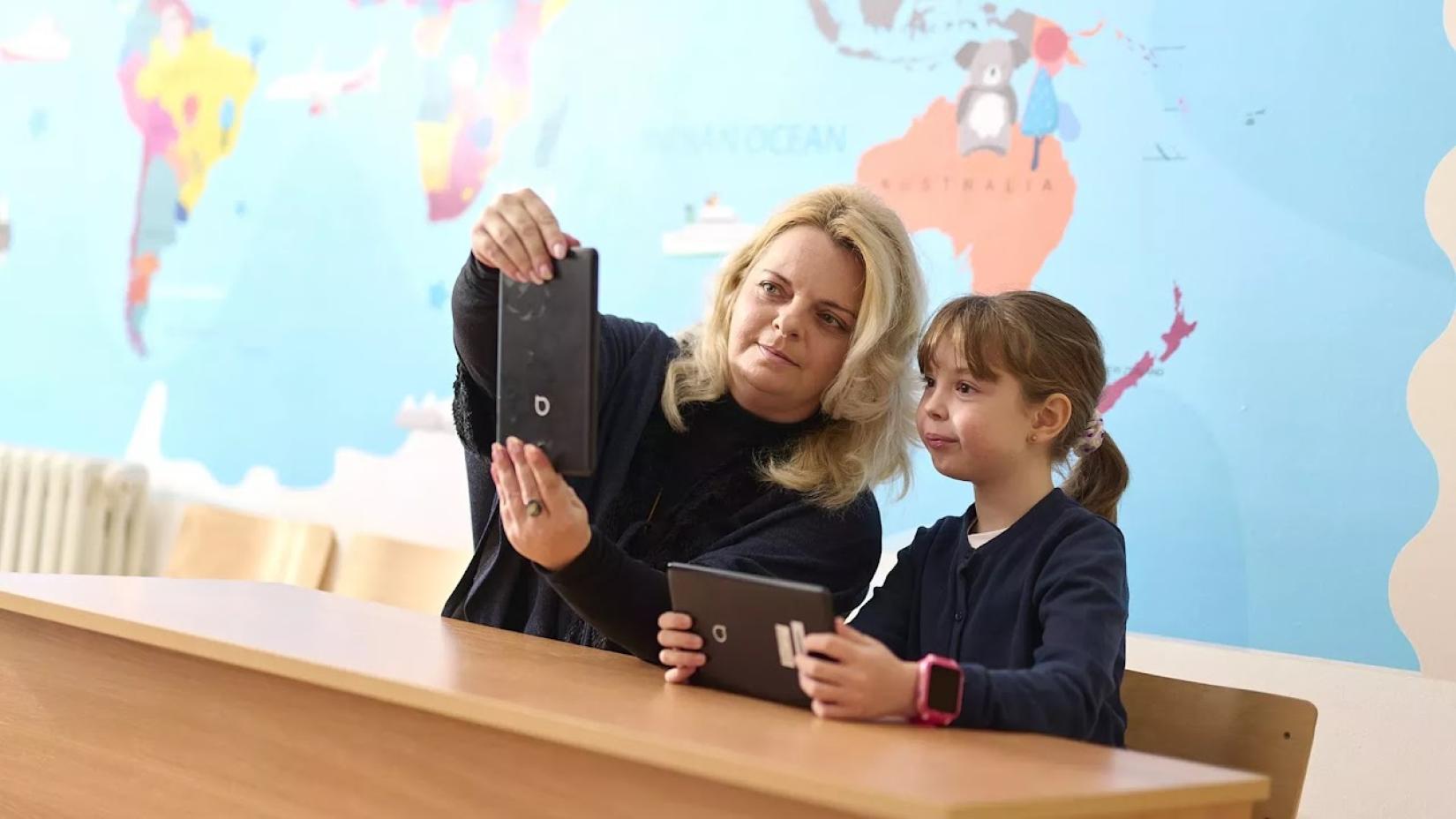
Country wide training for ICT coordinators to implement Digitalna škola concept and enhance its use in classroom for the benefit of children, adolescents and teachers (UNICEF) has been implemented for total of 170 of coordinators. Furthermore, the capacity-building program on the use of Office 365 tools has successfully empowered primary and secondary school teachers to integrate digital tools into their teaching methodologies for online, offline, and blended learning. With 300 teachers trained, the program has improved the ability of teachers to effectively use Office 365 tools for lesson planning, collaboration, and interactive learning. This directly contributes to a more resilient and adaptable education system capable of responding to disruptions such as school closures or emergency situations.
The Media and Information Literacy (MIL) capacity-building program has equipped 141 teachers with the knowledge and skills to integrate MIL principles into their classrooms. The program’s structural impact includes embedding critical thinking into the education system by ensuring teachers are prepared to teach students how to navigate digital and media landscapes safely and effectively, as well as strengthening students’ ability to identify misinformation, resist online manipulation, and engage in respectful and informed digital communication. Further, based on the very positive feedback and highly expressed interest for the trainings by the school management and teachers in the project communities, additional 100 teachers from the schools currently participating in the project, as well as from other primary and secondary schools from the project area.
Additionally, a Teacher Training on Digital Content Creation is currently being developed for all ICT coordinators from the northern region.
Also, over 150 teachers were capacitated to implement STEM/coding courses as regular and extra-curricular programs in the field of 3D modelling and printing, scratch programming, PET recycling, and robotics.
Finally, the E-Pedagogy course was successfully developed and made available via an online platform as a self-study course, complemented by live webinars for participants. The course was fully completed with 34 participants. In parallel, the Employability Skills course was developed as a self-study course supported by live webinars, with 25 participants in total.
All capacity building programmes / courses have been included in the Catalogue of Professional Development Programmes adopted in September 2025, ensuring their continued implementation.
2. Digital content development and establishing the EdTech hubs – to provide quality and inclusive learning opportunities for all children and adolescents, including Roma, disadvantaged and students with disabilities, with focus on gender equity.
EdTech Hubs are established at primary and secondary schools' levels to provide quality and inclusive learning opportunities for all children and adolescents.
Initially, by establishing EdTech hubs in six municipalities (Berane, Rozaje, Plav, Mojkovac, Petnjica, Pljevlja) for twelve schools, from start of the project in December 2024 until equipping of laboratories by mid-2024, the aim was to enhance the capacities of all teachers and ICT coordinators, to create and use sustainable digital ecosystem in schools in work with children and adolescents. Our main partner in the project, Ministry of Education, Science and Innovation recognized the importance of such initiative and its reach, while stepping in and investing in equipping additional 90 schools across whole Montenegro with EdTech Hubs. As of March 2025, total of 102 schools is using EdTech laboratories across whole Montenegro.
These laboratories contain state-of-the-art equipment such as 3D printers, PET recyclers, sets for robotics, Micro:bit devices, and computer equipment.
Development and prioritization of digital infrastructure is well reflected in the relevant strategic frameworks and policies, such as the envisioned Strategy for Digitalization of Education (2022-2027), newly adopted Education Reform Strategy (2025 – 2035), as well as the Reform Agenda for the Western Balkans.
This initiative created the prerequisites for the implementation of teaching in STEAM disciplines, primarily 3D modelling, robotics, coding and programming but also aiming to promote the implementation of creative and interactive learning in other disciplines within both EdTech hubs and classrooms.
Moreover, three online courses were developed and launched on Digital School platform – with focus on programming, PET recycling, 3D modelling and printing as well as first steps in programming and robotics. Also, the above mentioned Employability skills course and E-pedagogy course were developed and launched.
Furthermore, although not initially planned, based on the teachers’ needs and the guidance from the Ministry of Education, Science and Innovation of Montenegro, 5 (five) digital courses on the use of Office 365 were developed, available to the teacher community via Digitalna skola learning platform.
Finally, the development of three (3) online courses on prevention of gender-based and sexual violence for teachers, students and parents is under development.
3. Community mobilization through planning and delivery of Digital skills summer camps, bringing together children, adolescents, teachers and practitioners to challenge and learn of digital world in a jointly created environment.
The two Digital skills summer camps took place over summer 2025. The organization Junior Achievement Montenegro hosted the Summer Camp of Digital and STEAM Skills, which took place from June 24-27th in Cetinje for primary school and 8-11th July for high-school participants. The camp was a four-day educational and developmental program intended for primary school students from six municipalities in Montenegro – Petnjica, Berane, Mojkovac, Rožaje, Pljevlja, and Cetinje as the host city. A total of 91 participants, including 10 teachers, took part, as well as additional 10 educators and the project team.
The aim of the STEAM skills camp was to encourage the development of skills for adolescents through practical and interactive workshops, with topics such as media and information literacy, 3D modeling and printing, robotics, and career guidance.
Through these combined methods and innovative formats of work and learning, the goal was to strengthen participants' skills in the mentioned areas and to foster critical thinking in fields that represent modern trends in the labor and education markets. The program included workshops, group activities, shared evening events, and excursions designed to promote teamwork, creativity, and experiential learning and received wide media coverage.
Contribution to EU Accession
EU accession is furthered by directly supporting underlying principles of Chapter 26/European Education Area. The proposal contributes to the Economic Reform Programme 2023-2025 (Measure 4: Digitalization of education and development of digital skills), to the educational and social rights objectives of the EU Digital Education Action Plan (2021-2027) and to the European Digital Agenda 2020-2030, including new, five-year European Skills agenda, enshrined in the European Pillar of Social Rights.
Project brief description
This initiative aims to address the challenges brought by the digital revolution by creating opportunities for over six thousand girls and boys in the poorest, northern region of Montenegro to develop digital skills in schools every day. The goal is to ensure equitable, quality, student-centered education for all children and adolescents, in line with the rapidly developing 21st century digital environment, with focus on the most disadvantaged, alongside providing support to teachers and parents.
Relevant links
Digitalno, inkluzivno i transformativno: Kvalitetno obrazovanje za sve (www.gov.me)
Škole za 21. vijek | UNICEF Crna Gora
EdTech Lab - OŠ Radojica Perović
M. Vukašinović o inovacijama u obrazovanju
Back